

How Much Do Home Repairs Cost in 2026
Last Updated: October 23, 2026
Quick Summary
Home repairs cost varies widely depending on what breaks and where you live, ranging from $150 to $300 for a simple faucet repair to over $10,000 for a roof replacement. Most homeowners should budget 1% of their home's value annually for maintenance and repairs, which smooths out years with major expenses and years with minimal costs.
Set aside 1% of your home's purchase price annually for maintenance and repairs, or use the cost-per-square-foot method of $1 to $1.50 per square foot per year
Roof replacement costs $9,000 to $25,000 for a full tear-off on 1,500-2,500 sq ft, while HVAC system replacement runs $6,000 to $12,000 for a 2-3 ton split system
Routine maintenance like HVAC tune-ups ($100-$200), gutter cleaning ($150-$300), and plumbing inspections ($200-$500) prevents costlier repairs later
Replace rather than repair when a single repair costs more than half the replacement cost or when a system has needed two or more repairs in two years
Table of Contents
Understanding Home Repair Costs and Why They Vary
Average Home Maintenance Costs Homeowners Should Expect
Most Expensive Home Repairs and Why They Cost So Much
Roof replacement and repair
HVAC system replacement
Water heater and plumbing repairs
Foundation and structural repairs
Creating a Home Maintenance and Repair Budget
The one-percent rule and cost-per-square-foot method
Building your home repair reserve fund
Repair Versus Replacement: Making the Right Call
A simple break-even framework
Worked examples
The questions that settle it
Financing Home Repairs and Managing Unexpected Expenses
Payment options and flexible financing
Insurance coverage and warranties
Prioritizing Repairs by Urgency and Safety
Common Mistakes Homeowners Make When Budgeting for Repairs
Frequently Asked Questions
Understanding Home Repair Costs and Why They Vary
How much do home repairs cost? The answer depends on what breaks, where you live, and whether you hire a professional or tackle it yourself.
At TNT Repairs It, we've helped homeowners plan for these obligations. Labor rates differ by region, material prices fluctuate, emergency calls cost more than scheduled work, and older homes need more repairs.
This guide breaks down realistic repair costs, the repairs that drain budgets fastest, and how to build a reserve fund that works.
Average Home Maintenance Costs Homeowners Should Expect
Most homeowners should budget for ongoing maintenance and occasional repairs every year.
Real budgets vary: some years you'll spend nothing major, other years a water heater fails or a roof leak appears.
Larger homes cost more to maintain, more systems, more square footage to paint, more roof to repair.
Consider these typical annual maintenance items:
HVAC filter replacements and tune-ups: $100-$200 per year
Gutter cleaning and repairs: $150-$300
Plumbing inspections and minor fixes: $200-$500
These routine costs prevent bigger problems. Neglecting HVAC maintenance leads to system failure. Ignoring gutters causes foundation damage.
Most Expensive Home Repairs and Why They Cost So Much
Certain repairs drain budgets faster than others. The ranges below reflect typical professional work, labor, materials, disposal, and standard permits, for a mid-size single-family home. Treat them as planning bands, not quotes: a steep roof, a crawlspace, or a historic home can push any of these toward the top of the range or beyond.

Roof replacement and repair
A roof replacement ranks among the most expensive home repairs. Asphalt shingle roofs last 15-20 years; metal roofs last 40-50 years. When a roof fails, replacement isn't optional, it protects everything beneath it.
Typical cost bands for asphalt shingle work:
Minor repair (flashing, a few shingles, a roof boot around a vent): roughly $300-$1,500
Section replacement (one slope or a damaged area): roughly $1,500-$5,000
Full tear-off and replacement, 1,500-2,500 sq ft: roughly $9,000-$25,000, with most homeowners landing in the low-to-mid teens
What drives the price: roof size in squares (100 sq ft per square), pitch (steep roofs need more safety rigging and slower labor), layers to tear off, decking condition, and whether new underlayment, drip edge, or ventilation is added.
HVAC system replacement
Most HVAC units last 15-20 years. When they stop working, replacement becomes necessary, especially during summer heat or winter cold.
Typical cost bands:
Diagnostic and minor repair (capacitor, contactor, blower motor, refrigerant top-off): roughly $150-$650
Major component repair (compressor or evaporator coil): roughly $1,200-$3,000
Full system replacement, 2-3 ton split system: roughly $6,000-$12,000 installed
What drives the price: system size (tonnage matched to square footage and climate), efficiency rating (SEER2), whether existing ductwork is reusable, line-set length, and whether the home needs electrical or refrigerant-line upgrades. Emergency replacement during a peak heat or cold snap commands a premium; scheduling in a mild month is one of the few levers homeowners control.
Water heater and plumbing repairs
Water heaters typically last 10-15 years. When they fail, you lose hot water immediately. Replacement includes the new unit, removal of the old one, and reconnection of gas or electrical lines.
Typical cost bands:
Tank water heater replacement (40-50 gallon): roughly $1,200-$2,500 installed
Tankless water heater: roughly $2,500-$5,000+, often more if gas line or venting must be upgraded
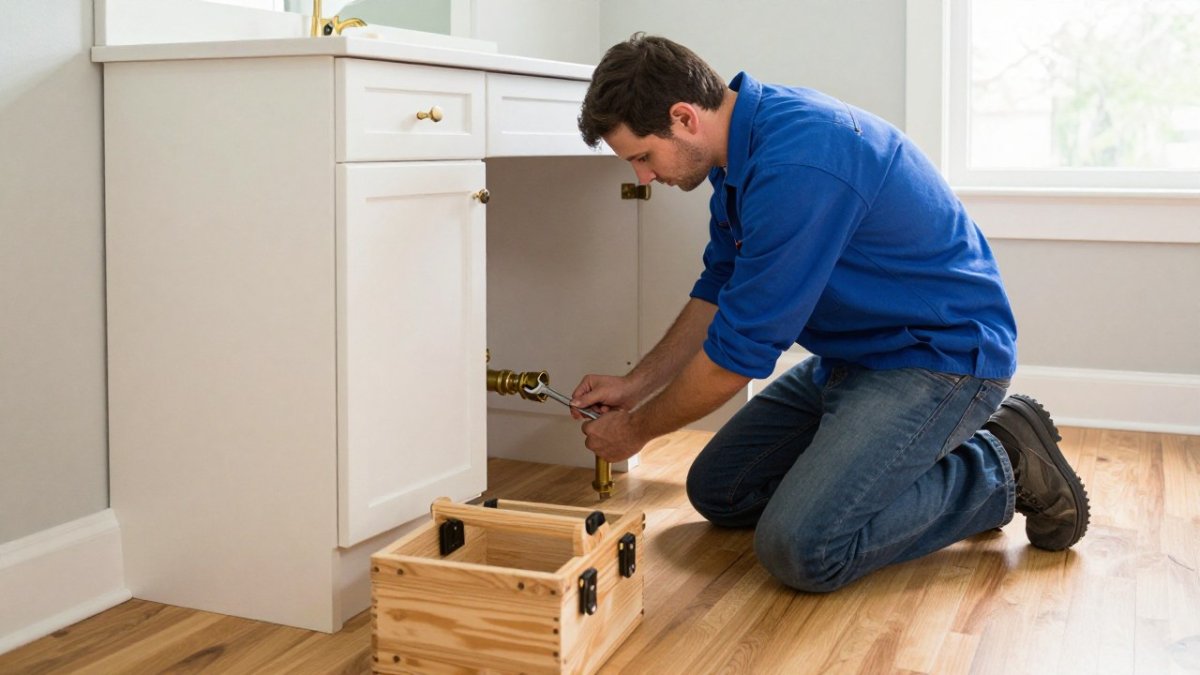
Simple drain clog or fixture repair: roughly $150-$450
Plumbing costs are driven less by parts than by access: a $40 fitting behind drywall can become a four-figure job once cutting, repair, and patching are included. Catch a failing water heater early, leaks that damage surrounding structures multiply costs quickly.
Foundation and structural repairs
Foundation problems are the most serious home repairs. Cracks, settling, or water intrusion require professional assessment. They're expensive because they're complex, require specialized equipment, and often involve excavation.
Typical cost bands:
Crack injection or minor crack sealing: roughly $500-$2,500
Pier and beam leveling or crawlspace support: roughly $3,000-$10,000
Slab foundation underpinning with piers: roughly $10,000-$30,000+, depending on pier count
These jobs take weeks or months and aren't optional, structural failure threatens the entire home's integrity. Because the range is so wide, always get at least two independent engineering or contractor assessments before committing.
Key Takeaway For every one of these systems, the cheapest quote is rarely the cheapest outcome. Ask each contractor what the estimate includes, permits, disposal, restoration, and warranty, so you are comparing like for like rather than a low bid against a complete one.
These major repairs represent the largest expenses homeowners typically face.
Repair Type | Typical Cost Range | Key Driver |
Roof minor repair | $300-$1,500 | Flashing, shingles, or vent boot |
Roof section replacement | $1,500-$5,000 | One slope or damaged area |
Roof full replacement | $9,000-$25,000 | 1,500-2,500 sq ft asphalt |
HVAC diagnostic and minor repair | $150-$650 | Capacitor, motor, or refrigerant |
HVAC full system replacement | $6,000-$12,000 | 2-3 ton split system installed |
Water heater tank replacement | $1,200-$2,500 | 40-50 gallon unit installed |
Plumbing burst or leaking pipe | $300-$1,000 | Accessible location repair |
Foundation crack injection | $500-$2,500 | Minor crack sealing work |
Creating a Home Maintenance and Repair Budget
Building a realistic budget requires understanding both routine maintenance and major repair cycles. Most homeowners fail here because they budget for routine costs but ignore the larger, less frequent repairs.
The one-percent rule and cost-per-square-foot method
The one-percent rule states that you should set aside 1% of your home's purchase price annually for maintenance and repairs, a $300,000 home gets a $3,000 annual budget.
The cost-per-square-foot method offers another approach. Multiply your home's square footage by $1 to $1.50 annually. A 2,000-square-foot home budgets $2,000-$3,000 per year.
These methods aren't perfect, but they prevent under-budgeting, homeowners who ignore them often face crisis when a major system fails unexpectedly.
Building your home repair reserve fund
Start a dedicated savings account for repairs. Automate monthly transfers so the money accumulates without temptation to spend it elsewhere. Treat this fund like an insurance policy, essential but hopefully unnecessary.
Keep records of all repairs and maintenance. This history helps contractors understand your home's condition and helps you spot patterns, if plumbing repairs happen annually, address the underlying issue rather than repeatedly patching.
Repair Versus Replacement: Making the Right Call
Deciding whether to repair or replace requires balancing cost today against cost over the next several years. A repair might be cheaper this month but more expensive over five years if the system keeps failing. The useful question isn't "what costs less now?", it's "what costs less per year of remaining service?"
A simple break-even framework
Use this rule of thumb, which most experienced contractors apply informally:
Estimate remaining life. Subtract the system's age from its typical service life. A 12-year-old water heater with a 12-year expected life has roughly zero years left; a 5-year-old HVAC unit has 10-15.
Compare repair cost to replacement cost. If a single repair costs more than about half of a full replacement, replacement usually wins on economics.
Multiply recurring repairs. If you've paid for two or more repairs on the same system in the past two years, the pattern itself is the signal, repeated failures usually mean the system is at end of life.
Add the risk premium. A failing system that can cause secondary damage (a leaking water heater near finished floors, a roof leak over insulation) carries a risk cost that a simple repair quote doesn't show.
Worked examples
Water heater, 12 years old, leaking from the tank: repair is often not possible on a tank leak, and even a patch buys months. Replacement at roughly $1,200-$2,500 delivers another 10-15 years. Replace.
HVAC, 5 years old, refrigerant leak: a $400-$900 repair on a system with 10+ years left is clearly worth it. Repair.
Roof, 18 years old, one leaking valley: a $600 flashing repair may buy a year or two, but if the shingles are near end of life, put the repair money toward replacement rather than patching repeatedly.
The questions that settle it
Ask yourself: How old is the system? How many repairs has it needed recently? What's the cost of repair versus replacement? How much longer do you plan to stay?
Contractors can help, they see these systems daily and understand when repair makes sense versus when replacement is inevitable. Get multiple opinions if you're uncertain, and ask each to put the repair-versus-replace math in writing so you can compare.
Pro Tip Ask for the "repair now, replace later" number: what the repair costs today and what replacement would cost if you wait. That two-line comparison often makes the decision obvious.
Financing Home Repairs and Managing Unexpected Expenses
Most homeowners don't have cash sitting around for a $5,000 roof repair or $8,000 HVAC replacement. Understanding financing options helps you handle emergencies without panic.
Payment options and flexible financing
Many contractors offer payment plans, accept credit cards, or partner with financing companies offering promotional rates for home improvements.
Home equity lines of credit (HELOCs) provide another option. If you have equity, you can borrow against it at rates typically lower than credit cards.
Personal loans from banks or online lenders work for smaller repairs. These unsecured loans don't require collateral but charge higher interest rates than home-secured options.
Insurance coverage and warranties
Homeowners insurance typically covers sudden damage (a tree falls on your roof) but not wear-and-tear failures (your roof ages and leaks) (Which disasters are covered by homeowners insurance?). Review your policy to understand what's covered.
New equipment often comes with warranties, a new roof might have a 10-year warranty, a new HVAC system a 5-year parts warranty. Understand what's covered and for how long.
Prioritizing Repairs by Urgency and Safety
Not all repairs are equally urgent. Some threaten safety. Others affect comfort. Some simply postpone inevitable replacement.
Safety issues come first. A electrical problem that causes sparks needs immediate attention. A gas leak is an emergency.
Next, address repairs that prevent further damage: a worsening roof leak damages insulation and framing, and a plumbing leak rots wood.
Comfort and convenience repairs can wait: a broken dishwasher is inconvenient but not urgent, and a non-functional bathroom vent is annoying but not dangerous.
Common Mistakes Homeowners Make When Budgeting for Repairs
Most homeowners underestimate repair costs because they ignore several common pitfalls.
Forgetting about labor. Materials are only part of the cost.
Ignoring system age. Older systems fail more often.
Deferring maintenance. Skipping routine maintenance creates bigger problems.
Choosing the cheapest contractor. The lowest bid often reflects lower quality or less experienced work.
Not planning for emergencies. Pipes burst and electrical systems fail.
Frequently Asked Questions
How much should I budget for repairs on a house?
Most homeowners should set aside 1% of their home's purchase price annually for maintenance and repairs. For a $300,000 home, that's $3,000 per year. However, the amount depends on your home's age, condition, and the major systems in place. Newer homes may need less; older homes typically require more. Building a repair reserve fund helps you handle unexpected expenses without financial stress.
What is the most costly repair on a house?
Roof replacement is typically the most expensive home repair, often ranging from several thousand to over $20,000 depending on size and materials. Foundation repairs, HVAC system replacement, and plumbing overhauls also rank among the most expensive. The cost depends on your home's square footage, the severity of damage, and local labor rates. Emergency repairs are usually more costly than preventive maintenance.
How can I estimate the cost of a home repair before hiring a contractor?
Request written estimates from multiple licensed contractors before committing to any repair. A detailed estimate should include materials, labor, timeline, and warranty information. For common repairs, you can research typical cost ranges online, but local factors like labor costs and material availability affect pricing. Always ask contractors how they calculate their estimates and what's included in the quote.
What if I can't afford to fix my house right now?
Prioritize repairs by safety and urgency first, such as roof leaks, electrical hazards, or plumbing issues that could cause water damage. For non-emergency repairs, explore flexible financing options, payment plans, or warranties offered by contractors. Some utility companies and nonprofits offer assistance programs for essential home repairs. Delaying non-urgent maintenance is better than ignoring safety issues that could worsen and cost more later.
Home repairs are inevitable. Every homeowner faces them eventually. The difference between financial stress and manageable costs comes down to planning. Build your repair reserve fund. Track your home's systems. Prioritize safety. Get multiple quotes from trusted contractors. At TNT Repairs It, we help homeowners navigate these decisions with transparent advice and professional service. When repairs come, and they will, you'll be ready.
Call Us!
Add tntrepairsit.com as a preferred source on Google →

Comments